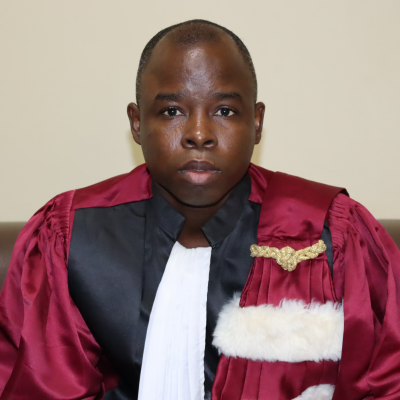
Short Biography: Pr. Ousmane SOW is a lecturer and researcher in the Electrical Engineering Department at the University Institute of Technology (IUT) of Iba Der Thiam University of Thiès (UIDT). He heads the DAT (Development and Application of Technology) research team at the LM3E (Laboratory of Materials, Energy, Electricity, and Economics) of the UIDT IUT.
Currently, Mr. Sow is the Director of the Thiès IUT. Previously, he was the Director of Studies at the Thiès IUT, after having been the Head of the Electrical Engineering Department at the Thiès IUT.
Specialties taught: Electronics, Automation, and Industrial Computing.
Research themes: Intelligent electronic systems, Photovoltaic solar energy.
Professor Ousmane Sow is the Deputy Coordinator for the Central West region of the SPS (Senegalese Physical Society), a national learned society and member of SOAPHYS, an international learned society.
Currently, Professor Ousmane Sow is the UIDT Coordinator for the AfriConnect+ project, funded by the European Union’s Erasmus+ program. This project focuses on IoT applications and brings together seven universities from four countries (Senegal, Morocco, Romania, and France) in a consortium. He is also the UIDT Coordinator for the CréaSAM project, funded by ADESFA in partnership with France, which focuses on capacity building in the fields of Automation and Maintenance.
Title: “ The Digital Revolution ” (La révolution numérique)
Abstract: La révolution numérique constitue l’un des bouleversements les plus profonds et les plus rapides de l’histoire moderne. Elle transforme simultanément les économies, les modes d’organisation sociale, les systèmes éducatifs, la gouvernance, ainsi que les rapports entre individus, institutions et technologies. Cette conférence propose une analyse structurée des dynamiques à l’œuvre, en mettant en évidence les ruptures majeures introduites par les technologies numériques (Intelligence artificielle, Internet des objets, big data, automatisation, services en ligne, plateformes collaboratives) et leurs implications dans les pays africains en particulier.