Our Speakers

Speaker n°1: Pr. Aawatif HAYAR

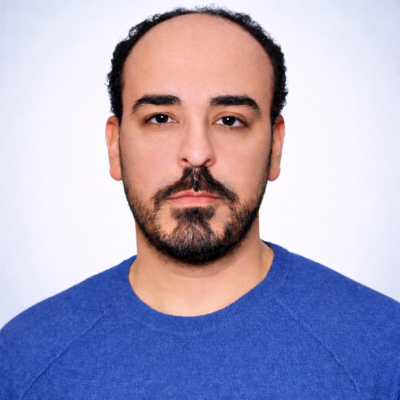
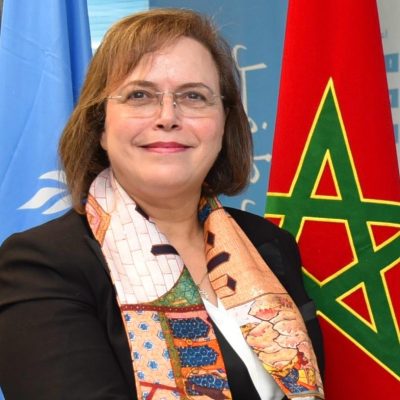
Pr. Aawatif HAYAR

Professor Expert in social policies and Frugal Social sustainable Smart Cities and Territories
  • Professor Expert in social policies and Frugal Social sustainable Smart Cities and Territories
  • Former Minister of Solidarity, Social Inclusion and Family 2021-2024
  • President of University Hassan II Casablanca, Morocco 2019-2021
  • General Chair of IEEE International Smart City Conference 2019, Casablanca Morocco
  • Chair of Frugal Social Smart City Casablanca IEEE Core smart cities project
  • Member of AUF international Council
    https://www.researchgate.net/profile/Aawatif_Hayar
    https://ma.linkedin.com/in/aawatif-hayar-5547395

Short Biography: Pr. Aawatif HAYAR is Expert in social policies and Artificial Intelligence powered inclusive sustainable smart cities and territories. Strategic Advisor at Presidency of University Mohammed VI Polytechnic on Artificial Intelligence driven Smart Cities in charge of AI Powered Smart Campus project@UM6P. Former Minister of Solidarity, Social Inclusion and Family 2021-2024. Aawatif Hayar was appointed President of the University Hassan II of Casablanca-Morocco From June 2019 till October 2021 and is the second female in the history of Morocco to occupy this position. She received, with honors, as the First Moroccan, the degree of “Agrégation” in Electrical Engineering from Ecole Normale Supérieure de Cachan in 1992. She received the “Diplôme d’Etudes Approfondies” in Signal processing Image and Communications and the degree of Engineer in Telecommunications Systems and Networks from ENSEEIHT de Toulouse in 1997. She received with honors the Ph.D. degree in Signal Processing and Telecommunications from Institut National Polytechnique in Toulouse in 2001. She was research and teaching associate at EURECOM’s Mobile Communication Department from 2001 to 2010 in Sophia Antipolis-France. Aawatif Hayar has an HDR (Habilitation à Diriger la Recherche) from University Sud Toulon Var from France on Cognitive Wideband Wireless Systems on 2010 and an HDR on Green Téléommunication from University Hassan II Casablanca on 2013. Aawatif Hayar has Professor position at the engineering school ENSEM of University Hassan II Casablanca since 2011. She is also member of Casablanca “Avant-garde” City think-tank and Chair of Frugal Social Smart City Casablanca IEEE Core Smart Cities project. Her research interests includes fields such as cognitive green communications systems, UWB systems, smart grids, digital for development, e-governance, open data for citizens, frugal social smart cities, social policies, Artificial Intelligence powered smart cities and Territories.

Title: “Paving the way towards Moroccan Frugal Sovereign Social AI model for Cognitive Smart Cities”

Abstract: This talk presents a new concept termed Frugal Social Sovereign Artificial Intelligence (FSSAI) seeking to place social and engineering innovation in the service of human development, economic development and social wellbeing. It places the human intelligence, at the center of the collective intelligence development process. It creates Augmented Intelligence able to tackle humanity’s real challenges, including climate change, education, health, Sustainable Development Goals (SDGs) and beyond. FSSAI prioritizes efficiency, energy optimization, ethics, inclusiveness and local relevance and ownership.


Speaker n°2: Pr. Ousmane SOW

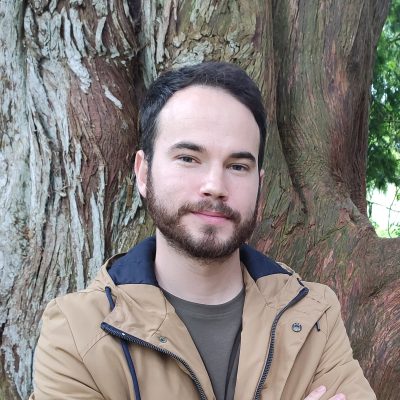
Pr. Ousmane SOW

Full Professor of Universities (Professeur Titulaire des Universités)- Iba Der Thiam University of Thies (UIDT)

Short Biography: Pr. Ousmane SOW is a lecturer and researcher in the Electrical Engineering Department at the University Institute of Technology (IUT) of Iba Der Thiam University of Thiès (UIDT). He heads the DAT (Development and Application of Technology) research team at the LM3E (Laboratory of Materials, Energy, Electricity, and Economics) of the UIDT IUT.

Currently, Mr. Sow is the Director of the Thiès IUT. Previously, he was the Director of Studies at the Thiès IUT, after having been the Head of the Electrical Engineering Department at the Thiès IUT.

Specialties taught: Electronics, Automation, and Industrial Computing.

Research themes: Intelligent electronic systems, Photovoltaic solar energy.

Professor Ousmane Sow is the Deputy Coordinator for the Central West region of the SPS (Senegalese Physical Society), a national learned society and member of SOAPHYS, an international learned society.

Currently, Professor Ousmane Sow is the UIDT Coordinator for the AfriConnect+ project, funded by the European Union’s Erasmus+ program. This project focuses on IoT applications and brings together seven universities from four countries (Senegal, Morocco, Romania, and France) in a consortium. He is also the UIDT Coordinator for the CréaSAM project, funded by ADESFA in partnership with France, which focuses on capacity building in the fields of Automation and Maintenance.

Title: “ The Digital Revolution ” (La révolution numérique)

Abstract: La révolution numérique constitue l’un des bouleversements les plus profonds et les plus rapides de l’histoire moderne. Elle transforme simultanément les économies, les modes d’organisation sociale, les systèmes éducatifs, la gouvernance, ainsi que les rapports entre individus, institutions et technologies. Cette conférence propose une analyse structurée des dynamiques à l’œuvre, en mettant en évidence les ruptures majeures introduites par les technologies numériques (Intelligence artificielle, Internet des objets, big data, automatisation, services en ligne, plateformes collaboratives) et leurs implications dans les pays africains en particulier.


Speaker n°3: Pr Elmahdi Driouch

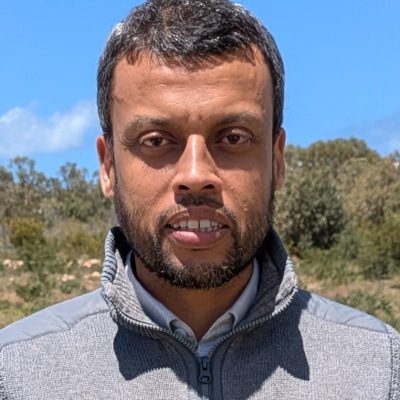
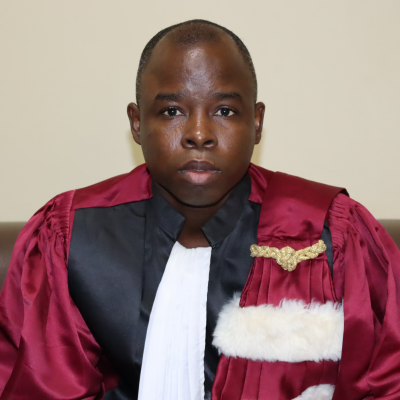
Pr. Elmahdi DRIOUCH

Associate Professor (Department of Computer Science Moncton)

Short Biography: Elmahdi Driouch received the B.E. degree from the National School of Applied Sciences, Marrakech, Morocco, in 2006, and the M.Sc. and Ph.D. degrees in Computer Science from the Université du Québec à Montréal (UQAM), Canada, in 2009 and 2013, respectively. He held postdoctoral research positions at Concordia University from 2014 to 2015 and at UQAM from 2016 to 2017.

From 2017 to 2019, he was an Assistant Professor with the Department of Computer Science at the Université de Moncton. He is currently an Associate Professor with the Department of Computer Science at UQAM.

His research interests include wireless communications and networks, resource allocation, and algorithm design, with a particular focus on efficient and scalable solutions for next-generation communication systems. His work has been published in numerous peer-reviewed journals and international conferences, where it has contributed to both theoretical advancements and practical system design

Title: “6G et intelligence connectée – défis physiques et solutions algorithmiques pour l’apprentissage fédéré  ”

Abstract:

The emergence of 6G represents a major turning point in wireless communications: we are shifting from a network designed to connect people to a structure specifically engineered for connecting intelligence. Federated Learning (FL) stands as a key driver of this transformation, enabling the collaborative training of AI models at the network edge without the need to centralize raw data. 
However, implementing FL in real-world wireless environments faces a veritable “physical wall.” Unlike the stable connections found in data centers, radio links are unpredictable, prone to interference, and constrained by battery life. Neglecting these physical constraints can severely degrade learning performance and potentially hinder model convergence. 
This keynote will begin by exploring the envisioned architecture for 6G (IMT-2030), highlighting the critical role of AI and its applications in this new generation. We will move beyond the simple race for data rates to explore how the convergence of computation and communication, coupled with emerging technologies such as Integrated Sensing and Communications (ISAC) and Non-Terrestrial Networks (NTN), is transforming wireless mobile infrastructure into a truly distributed data center. 
Subsequently, we will detail recent contributions aimed at optimizing hierarchical federated learning through two complementary approaches: 
  • An “Online” Algorithmic Approach: Using Multi-Armed Bandits (MAB) to manage client association and real-time modulation adaptation, thereby transforming wireless channel uncertainty into a sequential decision-making problem. 
  • An Incentive-Based Approach: Applying Contract Theory to address information asymmetry, ensuring that rational intermediate nodes are motivated to participate in the aggregation process.


Speaker n°4: Pr. Othmane EL MESLOUHI

Pr. Othmane EL MESLOUHI

Professor in computer sciences ( ENSA, Cadi Ayyad University, Morocco)

Short Biography: Pr. Othmane EL MESLOUHI is a Full Professor at the National School of Applied Sciences (ENSA) in Safi, part of Cadi Ayyad University. He earned his Ph.D. in Computer Science from the Faculty of Sciences and Techniques of Settat. 

Since beginning his academic career in 2013, he has been actively involved in research and the supervision of Ph.D. candidates and final-year projects. His research focuses on Quantum Machine Learning, Deep Learning, Pattern Recognition, Medical Imaging, and Computer Vision.”
 

Title: “ Beyond the Classical: From Feature Engineering to the Era of Quantum Machine Learning in Medical Imaging”

Abstract: The history of medical image processing is a relentless quest to extract meaning from complex data. Historically, this field has been dominated by explicit feature engineering (hand-crafted features). For decades, the performance of computer-aided diagnosis systems relied on the robustness of mathematical descriptors such as SIFT detectors or Harris corner detectors. While foundational, these methods required considerable human expertise to model relevant characteristics and often lacked generalization capabilities in the face of biological variability.

The emergence of Deep Learning marked a paradigm shift, replacing manual extraction with the learning of hierarchical representations via Convolutional Neural Networks and Vision Transformers. However, as image resolution increases and precision medicine demands the analysis of massive multimodal data, classical architectures are approaching their theoretical and energy limits. The computational complexity of certain non-convex optimization problems in medical imaging remains a major obstacle for current supercomputers.

It is within this context of technological saturation that we introduce a new frontier. The advent of quantum technologies opens unprecedented horizons for machine learning by pushing the boundaries of classical approaches. This presentation explores the potential of Quantum Machine Learning (QML) through its concrete application in the field of medical imaging, particularly for the early detection of pathologies and high-complexity image segmentation.


Speaker n°5